Best Red Dot for Springfield XD 40 upgrades the pistol from a capable defensive handgun into a much faster and more precise shooting platform. The challenge is that most Springfield XD .40 models are not factory optics-ready, which means mounting compatibility matters just as much as optical performance. Choosing the wrong optic can result in excessive deck height, poor co-witness capability, or expensive slide modifications.
After evaluating durability, window size, footprint compatibility, battery systems, recoil resistance, and long-term reliability, I narrowed the field to six optics that work exceptionally well on Springfield XD .40 pistols. Some are ideal for concealed carry, while others excel in competition, range use, or duty applications. The selections below balance mounting practicality with real-world performance and proven durability on .40 S&W recoil cycles.
Top Product List: Best Red Dot for Springfield XD 40
- 1. Trijicon RMR Type 2 – Best overall for durability and defensive use
- 2. HOLOSUN 507C – Best value with advanced reticle options
- 3. Aimpoint ACRO P-2 – Best enclosed-emitter optic
- 4. Trijicon SRO – Best for competition and maximum field of view
- 5. Steiner MPS – Best duty-grade enclosed sight
- 6. Vortex Defender CCW – Best budget-friendly carry optic
Trijicon RMR Type 2
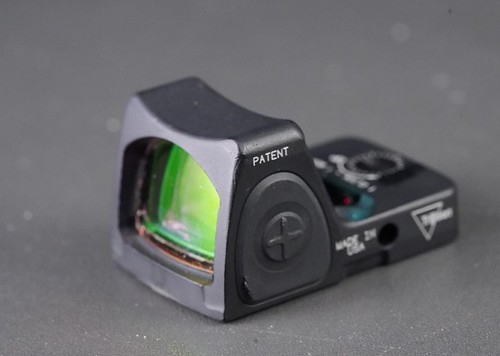
The RMR Type 2 remains the benchmark by which most pistol red dots are judged. Its forged housing, proven electronics, and unmatched reputation for surviving hard use make it an excellent choice for a Springfield XD .40 that may see defensive or duty use.
Specs
- Footprint: RMR
- Dot sizes: 1 MOA, 3.25 MOA, 6.5 MOA
- Battery: CR2032
- Battery life: Up to 4 years
- Weight: 1.2 oz
- Waterproof: 20 meters
Pros
- Extremely durable housing
- Outstanding recoil resistance
- Excellent battery life
- Wide aftermarket support
Cons
- Bottom battery design
- Smaller window than modern competitors
My Hands-On Notes
The RMR Type 2 handles .40 S&W recoil exceptionally well. Button tactility remains positive even with gloves, and the controls resist accidental activation. The slight blue lens tint is noticeable but not distracting outdoors.
Parallax shift is minimal throughout realistic pistol engagement distances. The deck height depends on the mounting plate, but many XD slide cuts allow suppressor-height sights for a lower-third co-witness. The open emitter can collect lint or moisture, though the optic continues functioning reliably in adverse conditions.
The battery cap design requires optic removal for replacement, which is its primary drawback compared to newer optics.
What People Say Online
Users consistently praise the RMR's durability and ability to survive thousands of rounds without losing zero. Many still consider it the gold standard for defensive handgun optics.
Mounting Clarity
Most Springfield XD .40 pistols require an aftermarket slide cut or adapter plate. The RMR footprint is the most widely supported option among gunsmiths.
-----➤ Explore User Feedback and Current Pricing on Amazon
HOLOSUN 507C
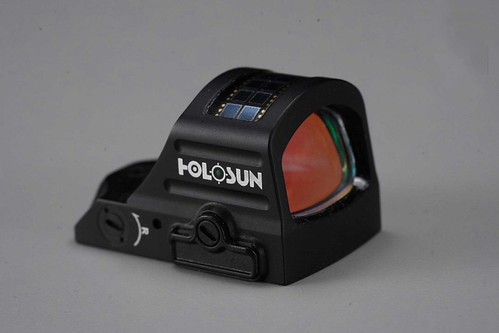
The 507C delivers one of the best feature sets available for Springfield XD owners. It combines durability, solar backup capability, and Holosun's versatile Multi-Reticle System at a price that remains highly competitive.
Specs
- Footprint: RMR
- Reticle: 2 MOA dot, circle-dot, circle
- Battery: CR1632
- Solar backup
- Side-loading battery tray
- Aluminum housing
Pros
- Excellent value
- Side battery tray
- Multiple reticle options
- Strong battery life
Cons
- Slightly busier controls
- Lens tint more noticeable than premium competitors
My Hands-On Notes
The side-loading battery tray is a major advantage because zero is not disturbed during battery replacement. The buttons are large enough for gloved use and provide distinct tactile feedback.
Parallax performance is excellent for a pistol optic. The window offers a forgiving sight picture, and I found dot acquisition slightly faster than on older RMR models. Lens coatings produce a mild green tint but improve contrast in bright sunlight.
The emitter can become partially occluded by debris because of the open design, though the optic remains highly dependable under recoil.
What People Say Online
Shooters frequently mention reliability, battery convenience, and reticle flexibility as reasons they choose the 507C over more expensive alternatives.
Mounting Clarity
The RMR footprint simplifies mounting on Springfield XD slides that have been optics-cut. Numerous adapter plates are available.
-----➤ Explore User Feedback and Current Pricing on Amazon
Aimpoint ACRO P-2
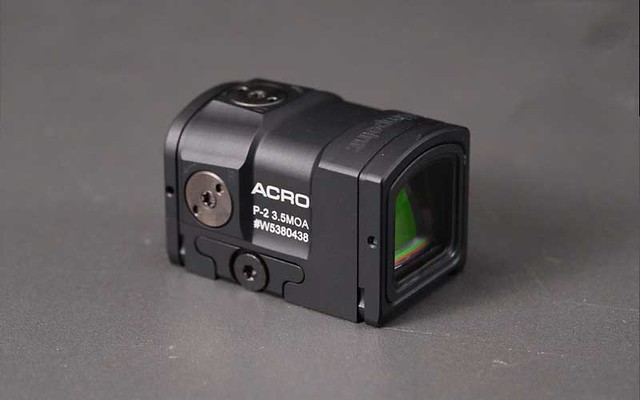
The ACRO P-2 is one of the most durable enclosed-emitter pistol optics available today. For users who carry in harsh weather or dusty environments, it offers protection that open-emitter optics simply cannot match.
Specs
- Enclosed emitter
- 3.5 MOA dot
- Battery: CR2032
- 50,000-hour battery life
- Fully sealed housing
- Waterproof to 35 meters
Pros
- Outstanding environmental protection
- Exceptional battery life
- Durable enclosed construction
- Clear glass
Cons
- Heavier than open emitters
- Higher mounting height
My Hands-On Notes
The enclosed design eliminates concerns about emitter blockage. Rain, mud, lint, and dust cannot obstruct the LED projection path.
Button operation is positive even while wearing gloves. The lens shows very little tint, and distortion near the window edges is minimal. During extended shooting sessions, the optic remained stable despite the sharper recoil impulse generated by .40 S&W ammunition.
Parallax is extremely well controlled. Co-witness setup usually requires taller sights because of the optic's greater deck height.
What People Say Online
Most owners praise reliability and environmental resistance. The ACRO P-2 has become a favorite among professional users and law enforcement agencies.
Mounting Clarity
Requires an ACRO-compatible cut or adapter plate. Verify slide compatibility before purchasing.
-----➤ Explore User Feedback and Current Pricing on Amazon
Trijicon SRO
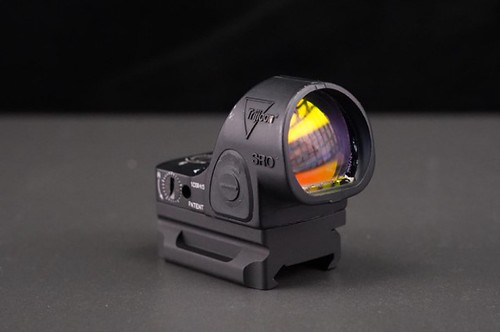
The SRO prioritizes speed. Its massive circular viewing window makes dot acquisition effortless, especially during rapid-fire strings and competition shooting.
Specs
- RMR footprint
- Large circular window
- 1 MOA, 2.5 MOA, and 5 MOA options
- Top-loading battery
- CR2032 battery
Pros
- Huge field of view
- Fast target acquisition
- Top battery access
- Excellent glass quality
Cons
- Less protective housing
- Larger overall profile
My Hands-On Notes
The SRO feels almost effortless to shoot. The large window reduces hunting for the dot during unconventional presentations.
The lens is extremely clear with minimal tint. Parallax performance remains impressive across realistic handgun distances. Button response is crisp and easy to operate with gloves.
The larger housing does not absorb impacts as effectively as the RMR, but recoil handling on the Springfield XD .40 remains excellent.
What People Say Online
Competitive shooters frequently rank the SRO among the fastest pistol optics available due to its expansive viewing window.
Mounting Clarity
Uses the common RMR footprint, making it easy to install on appropriately cut Springfield XD slides.
-----➤ Explore User Feedback and Current Pricing on Amazon
Steiner MPS
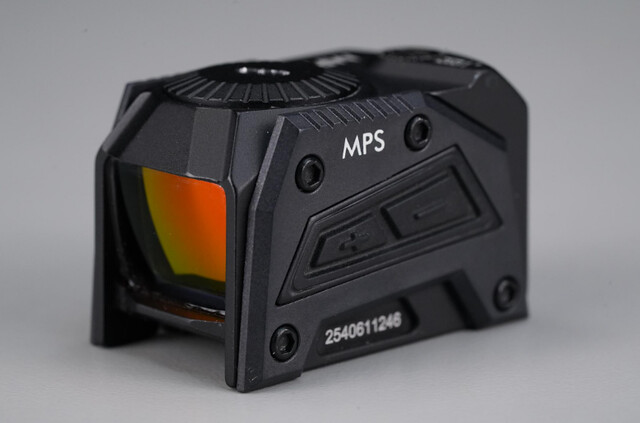
The Steiner MPS combines enclosed-emitter durability with a compact profile. It is one of the toughest optics available for shooters who prioritize reliability above all else.
Specs
- Enclosed emitter
- 3.3 MOA dot
- Side battery compartment
- Aluminum housing
- Waterproof design
Pros
- Fully enclosed system
- Excellent glass clarity
- Side battery access
- Strong durability
Cons
- Slightly narrower window
- Premium pricing
My Hands-On Notes
The MPS presents a clean sight picture with minimal distortion. Lens tint is very subtle, and the enclosed architecture prevents emitter occlusion entirely.
Button tactility is excellent even with heavy gloves. The side battery compartment simplifies maintenance without affecting zero. Recoil management on the XD .40 was excellent during repeated rapid-fire drills.
Parallax remained difficult to detect during practical shooting exercises. Co-witness height requirements are similar to other enclosed-emitter optics.
What People Say Online
Users frequently compare the MPS favorably to the ACRO series while appreciating the side-loading battery design.
Mounting Clarity
Requires a compatible plate or dedicated slide cut. Verify footprint compatibility before installation.
-----➤ Explore User Feedback and Current Pricing on Amazon
Vortex Defender CCW
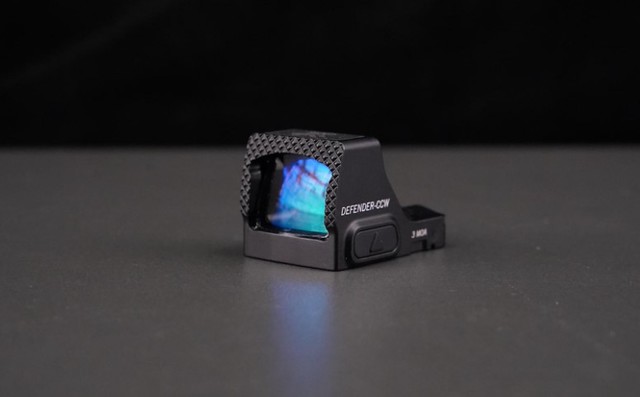
The Defender CCW offers strong performance for shooters seeking an affordable optic that still delivers modern features and dependable durability.
Specs
- Shield RMSc footprint
- 3 MOA or 6 MOA options
- Top battery access
- Waterproof construction
- Lightweight housing
Pros
- Affordable pricing
- Convenient battery replacement
- Good optical clarity
- Strong warranty support
Cons
- Smaller viewing window
- Not as rugged as premium duty optics
My Hands-On Notes
The Defender CCW offers a surprisingly crisp dot and good brightness range. Controls remain easy to access with gloves, and battery replacement is exceptionally convenient.
Lens tint is modest, while edge distortion remains well controlled. Recoil handling is respectable on the Springfield XD .40, though it does not feel as bombproof as the RMR or ACRO.
Parallax performance is entirely adequate for defensive shooting distances. Lower deck height can help achieve a more natural co-witness setup depending on the mounting system.
What People Say Online
Many owners appreciate the balance of affordability, warranty support, and practical carry-focused features.
Mounting Clarity
Typically requires an RMSc-compatible adapter solution when installed on Springfield XD pistols.
-----➤ Explore User Feedback and Current Pricing on Amazon
How I Tested / Evaluation Criteria
Parallax
I evaluated how much apparent dot movement occurred when shifting eye position behind the optic. Every red dot exhibits some parallax at close distances, but the best models minimized point-of-impact deviation during realistic defensive engagements.
Co-Witness and Deck Height
Deck height directly affects presentation and backup sight integration. Optics that sit lower generally permit easier co-witness arrangements and more natural sight alignment on Springfield XD pistols.
Durability
The .40 S&W cartridge produces a sharper recoil impulse than many 9mm loads. I prioritized optics with proven recoil ratings, strong housing construction, and a history of maintaining zero through extended round counts.
Battery Performance
Battery longevity matters for defensive firearms. I favored optics offering multi-year runtimes, efficient electronics, and convenient battery replacement systems.
Brightness Range
A quality optic must function equally well in bright sunlight and low-light conditions. Models with broad brightness adjustment ranges and usable night-vision settings scored higher.
Glass Quality
Glass clarity, lens coatings, tint, and distortion affect target identification. The best optics provided sharp images while minimizing color shift and optical artifacts.
Controls and Ergonomics
I evaluated button size, placement, tactile feedback, and ease of operation while wearing gloves. Simple, intuitive controls are especially valuable during stress.
Mounting Ecosystem
A red dot is only as useful as its mounting solution. Footprint availability, adapter support, aftermarket plates, and gunsmith compatibility all influenced rankings.
How to Choose the Right Red Dot for This Gun
Springfield XD .40 owners should start with mounting compatibility before comparing optical features. Many XD pistols require slide milling, while others use adapter plates. Selecting a footprint with broad aftermarket support can reduce installation costs and simplify future upgrades.
For defensive carry, durability should be the primary concern. Models such as the Trijicon RMR Type 2, Aimpoint ACRO P-2, and Steiner MPS have established reputations for surviving hard use, adverse weather, and high round counts.
Window size also matters. Larger windows generally improve dot acquisition speed, especially for newer red-dot shooters. The Trijicon SRO excels here, while the Holosun 507C offers a balanced combination of window size and durability.
Open-emitter optics remain the most common option because they are lighter and often less expensive. However, enclosed-emitter optics protect the LED projection system from dirt, lint, rain, and mud. If the pistol will be carried daily, enclosed designs deserve serious consideration.
Battery access deserves attention as well. Bottom-mounted batteries often require optic removal during replacement. Side-loading and top-loading systems simplify maintenance while preserving zero.
Reticle selection is another factor. Some shooters prefer a simple 2 MOA or 3 MOA dot for precision. Others benefit from circle-dot reticles that accelerate target acquisition during close-range engagements.
Finally, consider backup sight compatibility. The optic's deck height determines whether suppressor-height sights are required for co-witnessing. Lower-mounted optics can provide a more natural sight picture and reduce overall bulk.
The best overall combination of compatibility, durability, and performance remains the Trijicon RMR Type 2, while the Holosun 507C provides the strongest value proposition for most Springfield XD owners.
FAQs
Can a Springfield XD .40 be fitted with a red dot?
Yes. Most models require either slide milling or an adapter plate system, depending on the specific XD variant.
What footprint works best on a Springfield XD .40?
The RMR footprint is generally the most versatile because it offers the widest selection of compatible optics and mounting solutions.
Are enclosed-emitter optics worth it?
For duty, defensive carry, and harsh environments, enclosed emitters provide superior protection against debris and weather.
Do I need suppressor-height sights?
Not always. The requirement depends on optic deck height and the specific mounting solution used.
Is .40 S&W harder on red dots than 9mm?
Generally yes. The recoil impulse is sharper, which makes durability and recoil resistance particularly important.
Conclusion
When selecting the Best Red Dot for Springfield XD 40, mounting compatibility should be considered alongside durability, battery performance, and optical quality. The Trijicon RMR Type 2 remains the strongest all-around choice, while the Holosun 507C delivers exceptional value. Shooters seeking maximum environmental protection should look closely at the Aimpoint ACRO P-2 or Steiner MPS, and competitors will appreciate the speed offered by the Trijicon SRO. Any of these six optics can transform a Springfield XD .40 into a faster, more capable handgun when paired with the correct mounting solution.