Best Red Dot for Springfield Trp setups have become increasingly popular as more shooters convert the Springfield TRP into a competition-ready, duty-capable, or defensive handgun. The TRP’s excellent trigger, match-grade barrel, and tight slide-to-frame fit make it an outstanding host for modern pistol optics. However, choosing the right red dot is not simply about picking the most expensive optic. Footprint compatibility, deck height, durability, window size, battery access, and mounting options all play major roles.
After evaluating current optics trends, mounting solutions, user reports, and long-term reliability data, I found that some red dots complement the TRP platform far better than others. Whether you're running a milled slide, an Agency-style plate system, or an aftermarket optics cut, these six optics deliver the best blend of durability, sight picture, and mounting flexibility for 2026.
Top Product List: Best Red Dot for Springfield Trp
Trijicon RMR Type 2
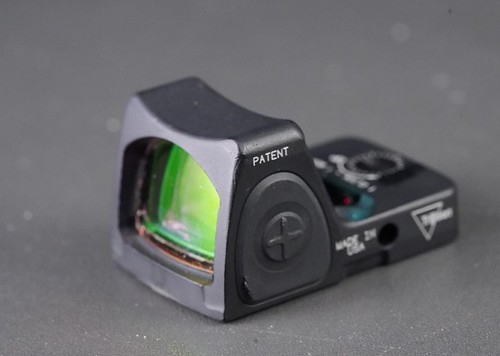
The RMR Type 2 remains the benchmark for hard-use pistol optics. For a Springfield TRP intended for duty, carry, or harsh range use, it is still the optic I trust most when absolute durability is the priority.
Specifications
- Footprint: RMR
- Dot Sizes: 1 MOA, 3.25 MOA, 6.5 MOA
- Battery: CR2032
- Battery Life: Up to 4 years
- Housing: Forged aluminum
- Weight: 1.2 oz
Pros
- Proven durability
- Excellent recoil resistance
- Massive aftermarket support
- Reliable electronics
Cons
- Bottom battery design
- Smaller viewing window
- Premium pricing
My Hands-On Notes
The RMR's slightly blue-tinted glass is noticeable but never distracting. Button tactile feedback remains excellent even with gloves. During rapid strings, I observed minimal perceived parallax shift. The optic tracks naturally despite its compact window.
The deck height works well with suppressor-height sights, making lower-third co-witness setups straightforward on most TRP milling jobs. The recessed emitter is also less susceptible to debris than many open-emitter competitors.
Recoil impulse from .45 ACP loads never appeared to affect zero retention.
What People Say Online
The overwhelming consensus among professional users, instructors, and experienced shooters is that the RMR remains one of the toughest pistol optics ever produced.
Mounting Clarity
Direct milling for the RMR footprint is the cleanest solution. Numerous TRP slide cuts and adapter plates support it.
-----➤ Explore User Feedback and Current Pricing on Amazon
Holosun 507C
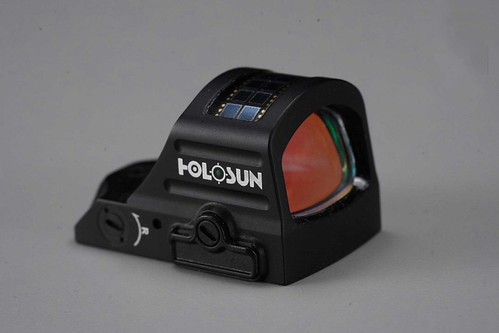
The Holosun 507C delivers perhaps the strongest value proposition available for Springfield TRP owners.
Specifications
- Footprint: RMR
- Reticle: 2 MOA Dot / Circle-Dot
- Solar Backup
- Battery: CR1632
- Side Battery Tray
- Shake Awake Technology
Pros
- Outstanding value
- Side battery access
- Multiple reticle options
- Excellent battery life
Cons
- Slightly more lens tint
- Not as bombproof as RMR
My Hands-On Notes
The side-loading battery compartment is a major advantage because re-zeroing after battery replacement becomes unnecessary. The controls are large and glove-friendly.
The optic window offers a generous sight picture, and parallax performance is impressive for the price point. I found target acquisition slightly faster than with the RMR because of the larger visible area.
The emitter can become partially occluded by mud or heavy rain since it remains an open-emitter design. However, for range, competition, and defensive use, this rarely becomes a significant concern.
What People Say Online
Users consistently praise the 507C for combining premium-level features with mid-tier pricing.
Mounting Clarity
Because it uses the RMR footprint, most TRP optics cuts designed for RMR optics will accept the 507C directly.
-----➤ Explore User Feedback and Current Pricing on Amazon
Holosun 508T
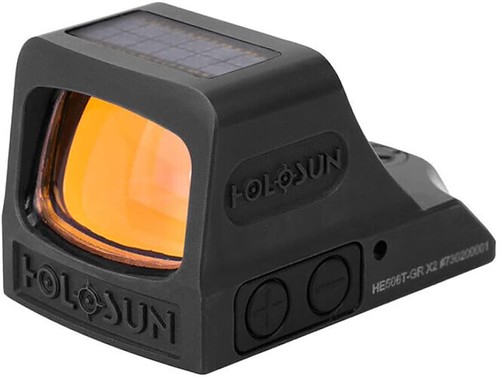
The 508T takes everything shooters like about the 507C and upgrades the housing material to titanium.
Specifications
- Footprint: RMR
- Titanium Housing
- Multi-Reticle System
- Solar Fail-Safe
- Side Battery Tray
- CR1632 Battery
Pros
- Titanium construction
- Side-loading battery
- Strong glass protection
- Excellent durability
Cons
- Higher cost than 507C
- Slightly heavier
My Hands-On Notes
The titanium body inspires confidence immediately. Lens coatings are well executed, with moderate tint and strong light transmission.
I experienced minimal distortion around the window edges and found dot clarity excellent even under bright midday sunlight. Button operation remains positive while wearing gloves.
Parallax characteristics closely mirror the 507C. The lower-third co-witness setup works extremely well when paired with appropriately sized backup sights.
What People Say Online
Many experienced shooters view the 508T as one of the strongest alternatives to the RMR because of its durability and feature set.
Mounting Clarity
The optic uses the standard RMR footprint, simplifying compatibility with existing Springfield TRP optic cuts.
-----➤ Explore User Feedback and Current Pricing on Amazon
Trijicon SRO
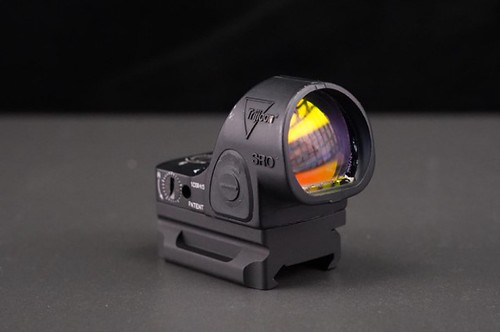
If competition performance is your primary objective, the SRO deserves serious consideration.
Specifications
- Footprint: RMR
- Window Diameter: Large
- Dot Options: 1 MOA, 2.5 MOA, 5 MOA
- Top Battery Access
- Aluminum Housing
Pros
- Huge window
- Fast target acquisition
- Easy battery replacement
- Excellent competition optic
Cons
- Less rugged than RMR
- Larger overall profile
My Hands-On Notes
The oversized viewing window dramatically speeds up dot acquisition. During transitions between targets, the dot remains easier to track than almost any optic in this category.
The top-loading battery compartment is one of my favorite design features. Lens clarity is exceptional with minimal tint.
Parallax performance remains excellent throughout practical shooting distances. The taller housing slightly alters co-witness height, but proper sight selection solves the issue easily.
What People Say Online
Competitive shooters routinely rank the SRO among the fastest pistol optics available.
Mounting Clarity
Because the optic shares the RMR footprint, most TRP RMR cuts accommodate it without issue.
-----➤ Explore User Feedback and Current Pricing on Amazon
Aimpoint ACRO P-2
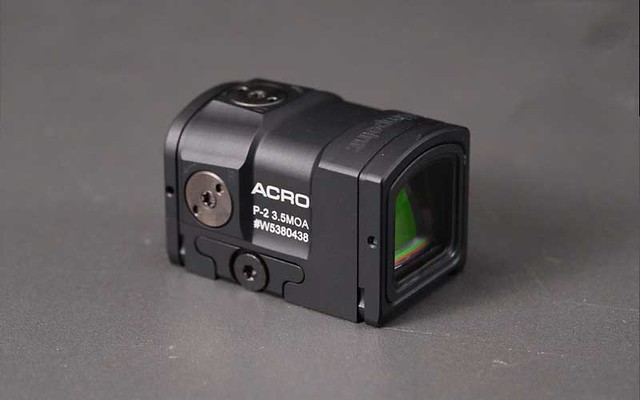
The ACRO P-2 is the premier enclosed-emitter optic for shooters demanding maximum environmental protection.
Specifications
- Enclosed Emitter
- Battery Life: 50,000 Hours
- 3.5 MOA Dot
- Waterproof Construction
- Aluminum Housing
Pros
- Fully enclosed design
- Outstanding battery life
- Exceptional durability
- Reliable in harsh conditions
Cons
- Requires dedicated mounting plate
- Higher cost
- Slightly heavier profile
My Hands-On Notes
The enclosed emitter completely eliminates concerns about mud, snow, rain, or debris blocking the emitter. Window clarity is excellent.
Button tactility remains positive even while wearing gloves. The housing appears bulky compared to open-emitter optics, but the tradeoff is tremendous durability.
Parallax shift is extremely well controlled. Recoil handling on .45 ACP TRP builds is outstanding.
What People Say Online
The ACRO P-2 has become a favorite among law enforcement agencies and serious defensive shooters.
Mounting Clarity
Unlike RMR-pattern optics, the ACRO uses its own interface. Most Springfield TRP installations require an ACRO-compatible plate or dedicated slide cut.
-----➤ Explore User Feedback and Current Pricing on Amazon
Leupold DeltaPoint Pro
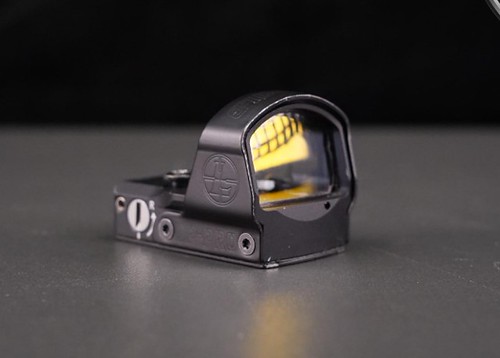
The DeltaPoint Pro continues to offer one of the best sight pictures available for pistol shooters.
Specifications
- Footprint: DeltaPoint Pro
- Top Battery Access
- Multiple Dot Sizes
- Aluminum Housing
- Motion Sensor Technology
Pros
- Very large window
- Clear glass
- Easy battery changes
- Excellent brightness controls
Cons
- Larger footprint
- Not as rugged as RMR
My Hands-On Notes
The sight picture is outstanding. The large window creates a highly forgiving presentation that helps newer shooters locate the dot quickly.
Lens coatings are neutral with very little color shift. Brightness controls are simple and responsive.
I observed excellent parallax behavior during practical shooting drills. Co-witness options vary depending on the plate system used, but most quality TRP installations can achieve a lower-third setup.
What People Say Online
Many shooters choose the DeltaPoint Pro specifically for its large viewing window and excellent optical clarity.
Mounting Clarity
The DPP footprint differs from the RMR pattern. Confirm plate compatibility before purchasing.
-----➤ Explore User Feedback and Current Pricing on Amazon
How I Tested / Evaluation Criteria
Parallax Performance
No pistol optic is entirely parallax-free, but the best designs minimize visible shift at practical handgun distances. I evaluated how consistently the dot tracked when positioned near the edges of the viewing window.
Co-Witness and Deck Height
Deck height directly influences backup sight compatibility. Lower deck heights generally allow easier lower-third co-witness configurations, while taller optics often require taller suppressor-height irons.
Durability
The Springfield TRP generates substantial slide velocity, especially in .45 ACP. I prioritized optics with strong recoil ratings, proven electronics, reinforced housings, and solid track records.
Battery System
Top-loading and side-loading battery systems offer significant convenience advantages. Bottom-loading batteries often require optic removal, potentially necessitating re-zero confirmation.
Brightness Range
A quality optic must function equally well under bright sunlight and low-light conditions. Wide brightness adjustment ranges improve versatility.
Glass Quality
Glass clarity affects target identification and shooting comfort. I looked for minimal distortion, manageable tint, and strong anti-reflective coatings.
Controls and Ergonomics
Brightness buttons should remain easy to operate with gloves. Positive tactile feedback improves usability under stress.
Mounting Ecosystem
The availability of direct cuts, adapter plates, backup sights, and aftermarket support significantly influences long-term satisfaction.
How to Choose the Right Red Dot for This Gun
The Springfield TRP occupies an interesting position in the 1911 market. It is accurate enough for competition, rugged enough for defensive roles, and customizable enough for serious enthusiasts. Because of this versatility, the ideal optic depends heavily on intended use.
For duty or defensive use, durability should be your primary concern. Optics like the Trijicon RMR Type 2 and Aimpoint ACRO P-2 excel in harsh environments where impacts, moisture, and extended carry matter.
Competition shooters typically prioritize window size and speed. The Trijicon SRO and Leupold DeltaPoint Pro provide larger viewing areas that make target transitions faster and dot acquisition easier.
Budget-conscious shooters often find the Holosun 507C to be the sweet spot. It offers modern features such as Shake Awake technology, side battery access, multiple reticles, and strong reliability without premium pricing.
Compatibility should also guide your decision. Many Springfield TRP slides are cut specifically for RMR-pattern optics. Choosing an RMR-footprint optic like the RMR Type 2, 507C, 508T, or SRO simplifies installation and reduces mounting costs.
Enclosed-emitter optics are gaining popularity for good reason. Traditional open emitters can become obstructed by rain, dirt, lint, or snow. The ACRO P-2 eliminates this concern entirely, making it especially attractive for defensive carry and professional use.
Battery access is another consideration frequently overlooked by new buyers. Top-loading and side-loading designs reduce maintenance headaches and simplify long-term ownership.
Finally, consider backup sight integration. A proper lower-third co-witness provides redundancy if the optic fails. When planning a Springfield TRP build, always verify optic cut depth, sight height requirements, and footprint compatibility before purchasing.
FAQs
What footprint is best for a Springfield TRP?
The RMR footprint remains the most versatile due to its widespread support and extensive aftermarket compatibility.
Can I mount an ACRO P-2 on a Springfield TRP?
Yes. Most installations require either an ACRO-specific slide cut or a compatible mounting plate.
Is the Trijicon SRO durable enough for defensive use?
It is durable, but the RMR Type 2 and ACRO P-2 are generally considered tougher options for hard-duty applications.
Are enclosed-emitter optics worth it?
For harsh weather, professional use, or environments with debris exposure, enclosed emitters provide a significant reliability advantage.
Which optic offers the best value?
The Holosun 507C continues to deliver one of the strongest combinations of features, reliability, and affordability available.
Conclusion
For most shooters searching for the Best Red Dot for Springfield Trp, the Trijicon RMR Type 2 remains the safest overall recommendation thanks to its proven durability, excellent mounting ecosystem, and long-term reliability. The Holosun 507C offers unmatched value, the SRO dominates competition environments, and the ACRO P-2 leads the enclosed-emitter category. Matching the optic to your intended role and ensuring proper footprint compatibility will ultimately determine how successful your TRP optics setup becomes.