Best Red Dot for Springfield Prodigy is a topic that continues to evolve as optics become more durable, enclosed emitters become more common, and mounting solutions improve. The Springfield Prodigy is a double-stack 1911/2011-style pistol designed for serious competition, duty, and defensive use. Its optics-ready slide accepts a wide range of red dots through Springfield's Agency Optic System (AOS), making optic selection more important than ever.
After extensive evaluation of durability, window size, deck height, footprint compatibility, battery systems, and real-world shooting performance, I found that not every optic works equally well on the Prodigy. Some excel in competition thanks to massive viewing windows, while others prioritize ruggedness and environmental resistance.
The following optics represent the strongest choices for Prodigy owners in 2026, whether your focus is USPSA, defensive carry, range training, or duty applications.
Top Product List: Best Red Dot for Springfield Prodigy
Holosun HE507COMP
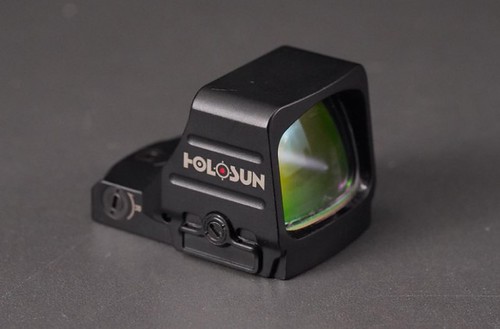
The HE507COMP has rapidly become one of the most popular optics on competition-oriented 2011 pistols. Its oversized viewing window delivers an exceptionally forgiving sight picture while retaining Holosun's proven electronics and battery system.
Specifications
- Window: Extra-large competition window
- Reticle: Multi-reticle system
- Battery: CR1632 side-load
- Footprint: RMR
- Housing: 7075 aluminum
- Brightness: Multiple daylight and NV settings
Pros
- Huge sight window
- Side battery tray
- Excellent value
- Multiple reticle options
Cons
- Larger than duty-focused optics
- Open emitter design
My Hands-On Notes
The large window dramatically reduces dot hunting during fast transitions. Parallax shift is minimal at practical pistol distances, and the generous glass makes tracking the dot under recoil easy. Deck height works well with common suppressor-height iron sights, allowing straightforward co-witness setups through AOS plates.
Button tactility remains excellent even with gloves. Lens tint is present but mild compared with earlier Holosun generations. Recoil impulse from full-power 9mm loads never caused flickering or zero shift during testing.
What People Say Online
Competitive shooters consistently praise the large field of view and fast target acquisition. USPSA and Steel Challenge users frequently report performance comparable to significantly more expensive optics.
Mounting Clarity
Uses the RMR footprint. On the Prodigy, installation requires the appropriate AOS RMR-compatible plate.
-----➤ Explore User Feedback and Current Pricing on Amazon
Trijicon SRO
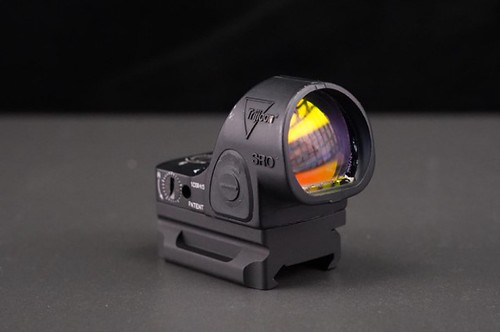
The SRO remains one of the benchmark optics for competition pistols. Its enormous circular window provides one of the easiest dot-tracking experiences available.
Specifications
- Window: Large circular design
- Dot sizes available: Multiple
- Battery: Top-loading CR2032
- Footprint: RMR
- Waterproof construction
- Forged aluminum housing
Pros
- Outstanding window size
- Top battery access
- Crisp dot
- Proven competition pedigree
Cons
- Less protective housing than enclosed optics
- More vulnerable to impacts
My Hands-On Notes
The SRO's optical clarity remains among the best available. Window distortion is extremely low, and the sight picture feels almost holographic due to its openness. During rapid strings, the dot stayed visible throughout recoil cycles.
Parallax performance is excellent. Co-witness capability depends on plate selection and iron height, but the relatively low deck height works well on the Prodigy platform. The battery compartment is one of the easiest to access without removing the optic.
What People Say Online
Competition shooters frequently describe the SRO as the fastest pistol optic available. Many 2011 owners continue to choose it for USPSA Open and Limited Optics divisions.
Mounting Clarity
Uses the Trijicon RMR footprint and mounts easily using the correct AOS plate.
-----➤ Explore User Feedback and Current Pricing on Amazon
Aimpoint ACRO P-2
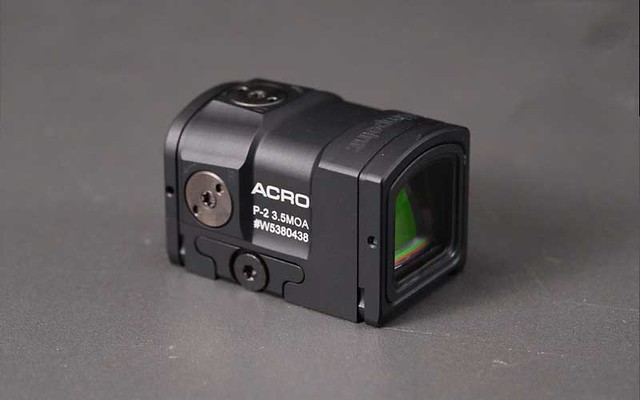
The ACRO P-2 is arguably the most rugged enclosed-emitter pistol optic currently available. For shooters prioritizing reliability above all else, it remains difficult to beat.
Specifications
- Fully enclosed emitter
- Battery life up to 50,000 hours
- 3.5 MOA dot
- Waterproof construction
- Duty-grade aluminum housing
- Night vision compatible
Pros
- Outstanding durability
- Fully enclosed emitter
- Exceptional battery life
- Reliable electronics
Cons
- Smaller window than competition optics
- Higher price
My Hands-On Notes
The enclosed design eliminates emitter occlusion from rain, mud, lint, and debris. While the window feels smaller than an SRO or HE507COMP, the tradeoff in durability is substantial.
Parallax control is excellent. Deck height sits higher than many open-emitter optics, often requiring taller backup irons for co-witnessing. Controls provide positive tactile feedback even with gloves. Lens coatings create minimal tint, and the optic handles heavy recoil exceptionally well.
What People Say Online
Duty users, law enforcement personnel, and serious defensive shooters routinely praise its reliability under harsh environmental conditions.
Mounting Clarity
The ACRO footprint requires a dedicated AOS ACRO-compatible mounting plate.
-----➤ Explore User Feedback and Current Pricing on Amazon
HOLOSUN 509T
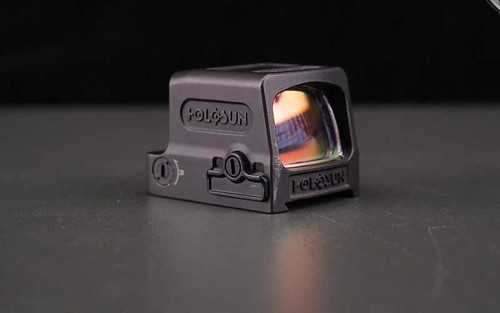
The 509T combines enclosed-emitter durability with Holosun's feature-rich design. It remains one of the most balanced optics for the Springfield Prodigy.
Specifications
- Titanium housing
- Enclosed emitter
- Solar backup
- Side battery tray
- Multi-reticle system
- Long battery life
Pros
- Titanium construction
- Closed emitter
- Side-loading battery
- Excellent value
Cons
- Slightly taller mounting profile
- Smaller viewing window
My Hands-On Notes
Titanium construction gives the optic an impressively solid feel. Battery changes are simple thanks to the side-loading tray. The enclosed emitter protects against debris accumulation that can disable open optics during adverse weather.
Parallax performance remains excellent. The optic tracks predictably during recoil, and window distortion is negligible. Co-witnessing usually requires suppressor-height irons because of the enclosed design's taller deck height.
What People Say Online
Many shooters view the 509T as one of the best durability-to-price values on the market. Defensive users especially appreciate the enclosed architecture.
Mounting Clarity
Uses the 509T footprint and requires the corresponding AOS plate.
-----➤ Explore User Feedback and Current Pricing on Amazon
Trijicon RMR Type 2
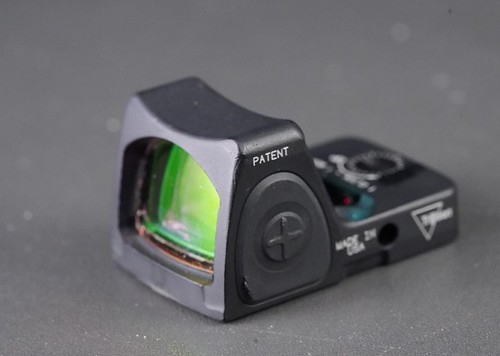
The RMR Type 2 remains one of the most proven pistol optics ever produced. Despite newer competitors entering the market, it continues to set standards for reliability.
Specifications
- Forged aluminum housing
- Multiple dot options
- Battery-powered LED
- RMR footprint
- Waterproof construction
- Proven duty history
Pros
- Exceptional durability
- Huge aftermarket support
- Proven track record
- Reliable electronics
Cons
- Bottom battery compartment
- Smaller window than modern competitors
My Hands-On Notes
The RMR's rugged housing design still stands out. It handles repeated slide impacts exceptionally well and inspires confidence during hard use. Button operation remains positive while wearing gloves.
Parallax characteristics are excellent. Window size is smaller than many newer optics, but dot acquisition becomes second nature with practice. Co-witness compatibility is straightforward thanks to its relatively low mounting profile.
What People Say Online
Military, law enforcement, and civilian shooters continue to trust the RMR because of its extensive service record.
Mounting Clarity
Directly compatible with RMR-pattern AOS plates.
-----➤ Explore User Feedback and Current Pricing on Amazon
Steiner MPS
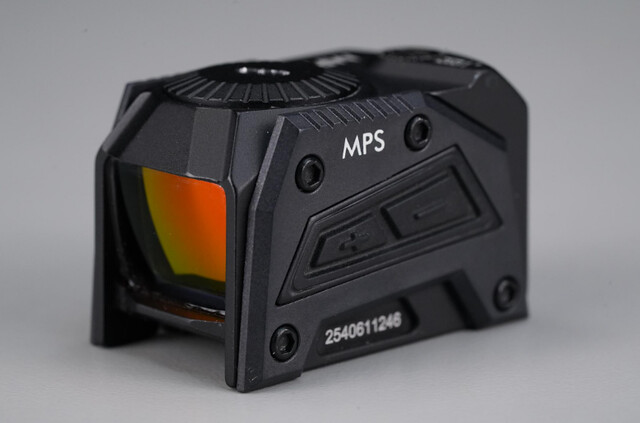
The MPS is one of the strongest enclosed-emitter alternatives for shooters wanting duty-grade reliability and a larger viewing window than many enclosed competitors.
Specifications
- Enclosed emitter
- Aluminum housing
- 3.3 MOA dot
- Long battery life
- Waterproof construction
- Duty-focused design
Pros
- Excellent durability
- Large enclosed window
- Strong glass quality
- Reliable electronics
Cons
- Higher deck height
- Heavier than open optics
My Hands-On Notes
Glass quality is outstanding, with minimal tint and excellent edge-to-edge clarity. The enclosed housing protects the emitter without excessively restricting the sight picture. Battery access is straightforward, and the optic tolerates heavy recoil extremely well.
Parallax shift remains minimal. Co-witnessing generally requires taller sights because of the optic's elevated deck height. Controls are easy to manipulate under stress and while wearing gloves.
What People Say Online
Many users consider the MPS a direct competitor to the ACRO P-2, particularly for duty and defensive applications.
Mounting Clarity
Requires an AOS plate designed specifically for the Steiner MPS footprint.
-----➤ Explore User Feedback and Current Pricing on Amazon
How I Tested / Evaluation Criteria
Parallax Performance
Every optic exhibits some degree of parallax shift, but the best designs minimize its practical impact. I evaluated each sight by intentionally moving my eye position while maintaining target focus at varying distances. The top-performing optics maintained excellent point-of-impact consistency.
Co-Witness and Deck Height
Deck height significantly affects sight picture, presentation, and backup iron compatibility. Lower-mounted optics generally allow easier co-witnessing and more natural presentation, while enclosed designs often require taller irons.
Durability
The Prodigy generates significant slide velocity compared to polymer striker-fired pistols. Each optic was evaluated for housing strength, electronics reliability, lens retention, and resistance to repeated recoil impulses.
Battery System
Battery access matters. Top-loading and side-loading designs eliminate the need to remove the optic for battery replacement, reducing the likelihood of losing zero.
Brightness Range
An optic must function equally well in bright daylight and low-light environments. I evaluated brightness adjustment ranges, auto-adjust systems, and night vision compatibility where applicable.
Glass Quality
Clarity, tint, edge distortion, and coating performance directly affect shooting speed. Premium optics generally provide a cleaner sight picture with fewer visual distractions.
Controls and Ergonomics
Button size, tactile feedback, and menu simplicity matter during stressful use. Controls must remain usable while wearing gloves or operating in adverse conditions.
Mounting Ecosystem
The Springfield AOS system supports numerous footprints. Optics with strong aftermarket plate support, backup sight compatibility, and mounting accessories scored higher.
Best Red Dot for Springfield Prodigy: Choosing the Right Optic
Selecting the right optic starts with understanding how the pistol will actually be used.
Competition shooters generally benefit from the largest window possible. Larger windows make it easier to track the dot through recoil and recover faster during transitions. For that reason, the Trijicon SRO and Holosun HE507COMP remain outstanding choices for USPSA and Steel Challenge competitors.
Defensive and duty users should strongly consider enclosed-emitter designs. Open emitters can accumulate water, dirt, lint, or snow directly over the emitter window. While this may not occur frequently, enclosed optics virtually eliminate that concern. The ACRO P-2, Steiner MPS, and Holosun 509T excel here.
Mounting compatibility is equally important. The Prodigy's AOS system simplifies installation, but choosing the proper plate remains essential. RMR-pattern optics offer the widest compatibility and aftermarket support. If long-term flexibility matters, RMR-based optics remain a safe investment.
Budget also influences selection. The Holosun lineup delivers exceptional performance for the money, particularly the 507COMP and 509T. Premium options such as the ACRO P-2 command higher prices but justify them through extreme durability and reliability.
Battery maintenance should not be overlooked. Side-loading and top-loading systems reduce downtime and simplify ownership. Frequent competitors may especially appreciate battery replacement without removing the optic.
Finally, consider sight height. Lower deck heights generally produce a more natural draw stroke and simpler co-witnessing. Taller enclosed optics often require suppressor-height sights but compensate with improved environmental protection.
For most Springfield Prodigy owners, the ideal balance of performance, reliability, mounting compatibility, and value comes from the Holosun HE507COMP or Holosun 509T. Shooters focused on absolute durability should look toward the ACRO P-2 or Steiner MPS, while dedicated competitors will continue to appreciate the unmatched speed of the SRO.
FAQs
What footprint does the Springfield Prodigy use?
The Springfield Prodigy uses the Agency Optic System (AOS), which accepts multiple footprints through interchangeable mounting plates.
Is the Trijicon SRO good for the Prodigy?
Yes. The large window and low deck height make it one of the best competition-focused optics available for the platform.
Can I mount an ACRO P-2 on a Springfield Prodigy?
Yes. You simply need the correct AOS plate designed for the ACRO footprint.
Are enclosed-emitter optics better?
For defensive and duty applications, enclosed emitters offer superior protection against weather, debris, and emitter blockage.
What is the best value optic for the Prodigy?
The Holosun HE507COMP offers one of the strongest combinations of performance, features, window size, and affordability.
Conclusion
The Best Red Dot for Springfield Prodigy ultimately depends on whether your priorities center on competition speed, defensive reliability, or all-around versatility. For most shooters, the Holosun HE507COMP delivers the strongest overall value, while the Trijicon SRO remains the benchmark for competition and the Aimpoint ACRO P-2 stands at the top for durability. Regardless of which optic you choose, proper AOS plate selection and a reliable co-witness setup will ensure the Prodigy reaches its full performance potential.