Best Red Dot For Springfield Loaded 1911 is not simply the optic with the biggest window or the longest battery life. The Springfield Loaded 1911 has a classic slide profile, a relatively narrow top end compared to modern double-stack pistols, and unique mounting considerations that can make optic selection more complicated than it is on striker-fired handguns.
I’ve spent years evaluating pistol optics on both modern and traditional platforms, and the 1911 remains one of the most rewarding handguns to upgrade with a red dot. The challenge is balancing durability, deck height, footprint compatibility, and sight picture without compromising the handling characteristics that make the 1911 so appealing.
For 2026, these six optics stand out because they offer proven reliability, practical mounting solutions, and performance characteristics that complement the Springfield Loaded 1911 exceptionally well.
Top Product List: Best Red Dot For Springfield Loaded 1911
Trijicon RMR Type 2
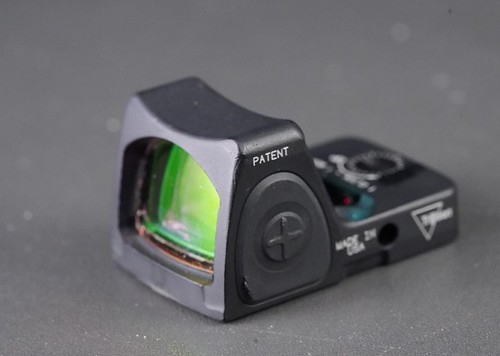
The Trijicon RMR Type 2 remains the benchmark for hard-use pistol optics. If I were building a Springfield Loaded 1911 intended for defensive carry, duty use, or high-round-count training, this would still be my first recommendation.
Specifications
- Footprint: RMR
- Dot Sizes: 1 MOA, 3.25 MOA, 6.5 MOA
- Battery: CR2032
- Battery Life: Up to 4 years
- Housing: Forged aluminum
- Waterproof: 20 meters
Pros
- Exceptional durability
- Proven military and law enforcement track record
- Excellent recoil resistance
- Large aftermarket support
Cons
- Bottom-loading battery
- Window smaller than newer designs
- Premium price
My Hands-On Notes
The RMR handles .45 ACP recoil exceptionally well. The forged housing shrugs off slide impacts and repeated cycling. Button tactility remains positive even with gloves. Lens tint is noticeable but not distracting in daylight.
Parallax shift is minimal at realistic handgun distances. When mounted properly on a milled 1911 slide, lower-third co-witness remains achievable with suppressor-height sights.
Emitter occlusion can occur during rain or heavy debris exposure because this is an open-emitter design.
What People Say Online
Across competitive shooters, defensive carriers, and professional users, the consensus remains clear: the RMR is still one of the toughest pistol optics ever produced. Many 1911 enthusiasts favor it because of the mature RMR mounting ecosystem.
Mounting Clarity
A Springfield Loaded 1911 generally requires slide milling or an RMR-compatible adapter plate. Direct milling produces the lowest deck height and best co-witness setup.
-----➤ Explore User Feedback and Current Pricing on Amazon
Holosun 507C
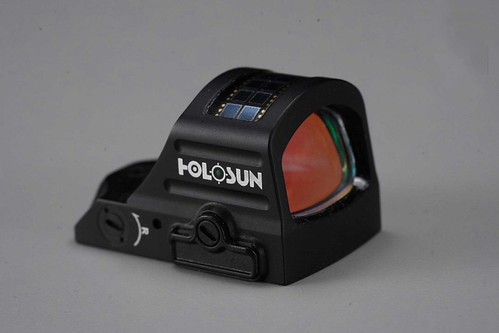
The Holosun 507C offers one of the strongest feature-to-price ratios in the pistol optic market. For Springfield Loaded owners seeking modern functionality without RMR pricing, it remains a standout option.
Specifications
- Footprint: RMR
- Reticle: 2 MOA dot, circle-dot
- Solar backup
- Battery: CR1632
- Shake Awake technology
- Aluminum housing
Pros
- Multiple reticle options
- Excellent battery life
- Competitive pricing
- RMR-compatible footprint
Cons
- Slightly more lens tint
- Open emitter design
- Buttons smaller than some competitors
My Hands-On Notes
The 507C tracks extremely well under .45 ACP recoil. I appreciate the crisp reticle and intuitive controls. The side-loading battery tray eliminates the need to remove the optic during battery replacement.
Parallax performance is excellent inside defensive distances. Co-witness height is similar to many RMR installations.
Lens distortion near the edges is minimal. Button feedback remains adequate with gloves, though not quite as tactile as premium-duty optics.
What People Say Online
The 507C is frequently recommended as the value leader among RMR-footprint optics. Users consistently praise battery life, reliability, and the flexibility of the multi-reticle system.
Mounting Clarity
Because it uses the RMR footprint, existing 1911 RMR cuts generally accept the 507C without modification.
-----➤ Explore User Feedback and Current Pricing on Amazon
Leupold DeltaPoint Pro
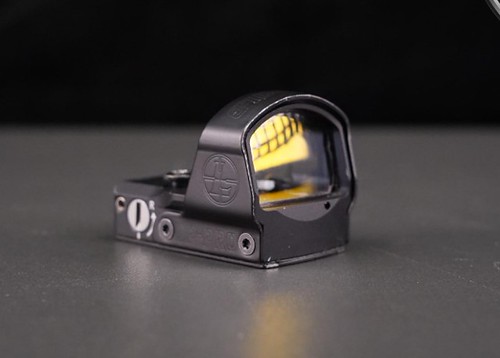
The DeltaPoint Pro remains one of my favorite optics for shooters who prioritize window size and rapid target acquisition.
Specifications
- Footprint: DeltaPoint Pro
- Dot Sizes: 2.5 MOA and 6 MOA
- Battery: CR2032
- Top-loading battery
- Aluminum housing
- Motion sensor technology
Pros
- Large viewing window
- Easy battery replacement
- Fast target acquisition
- Bright illumination
Cons
- Larger overall footprint
- Requires dedicated mounting solution
- More exposed lens area
My Hands-On Notes
The generous window noticeably speeds transitions. During rapid strings of fire, dot tracking feels extremely natural. Lens coatings maintain good clarity while keeping reflections controlled.
Parallax is very well managed. Co-witness generally requires taller iron sights due to the optic’s deck height.
Battery access is among the best in the category. The top-loading compartment makes maintenance effortless.
What People Say Online
Many competition shooters and experienced 1911 users appreciate the DeltaPoint Pro for its expansive sight picture and user-friendly design.
Mounting Clarity
A dedicated DeltaPoint Pro cut is ideal. Adapter plates can work, but direct milling improves reliability and reduces height over bore.
-----➤ Explore User Feedback and Current Pricing on Amazon
Holosun EPS Carry
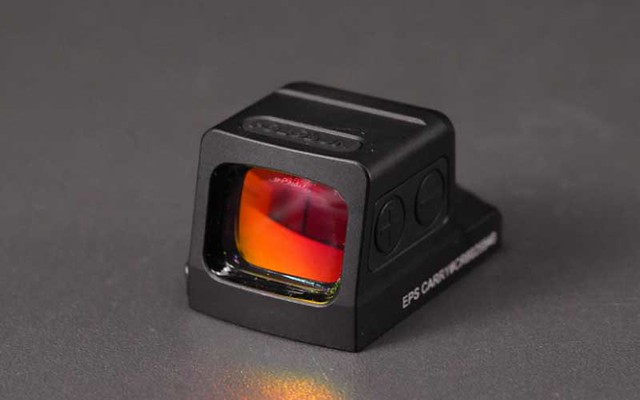
The EPS Carry introduces enclosed-emitter protection in a compact package that works surprisingly well on a Springfield Loaded 1911.
Specifications
- Enclosed emitter
- Multi-reticle system
- Battery tray design
- Aluminum housing
- Shake Awake
- Waterproof construction
Pros
- Enclosed emitter reliability
- Excellent weather resistance
- Compact dimensions
- Outstanding battery efficiency
Cons
- Smaller window
- Requires adapter considerations
- Less traditional 1911 aesthetic
My Hands-On Notes
The enclosed emitter eliminates one of the biggest weaknesses of open-emitter optics. Mud, lint, rain, and debris cannot obstruct the emitter.
Parallax performance remains excellent. Window distortion is controlled, and the reticle stays crisp throughout brightness settings.
Button operation is positive with gloves. The side tray battery system remains one of my favorite designs currently available.
What People Say Online
Users consistently praise the EPS Carry for dependable performance in harsh environmental conditions and concealed carry roles.
Mounting Clarity
Most Springfield Loaded installations require adapter solutions or custom milling. Verify footprint compatibility before committing to a mounting setup.
-----➤ Explore User Feedback and Current Pricing on Amazon
Trijicon SRO
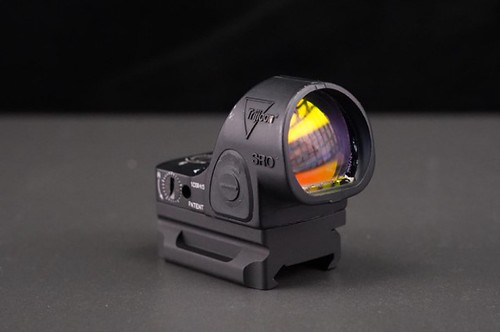
The Trijicon SRO is arguably the fastest pistol red dot available for competition-oriented 1911 builds.
Specifications
- Footprint: RMR
- Dot Sizes: 1 MOA, 2.5 MOA, 5 MOA
- Large circular window
- Top-loading battery
- Aluminum housing
- Adjustable brightness
Pros
- Huge viewing window
- Extremely fast dot acquisition
- Excellent glass quality
- Convenient battery access
Cons
- Less impact resistant than RMR
- Larger profile
- Better suited to competition use
My Hands-On Notes
The oversized window significantly reduces dot hunting. During recoil, the dot remains easy to track through rapid follow-up shots.
Lens tint is minimal and optical clarity is excellent. Parallax shift remains insignificant during practical shooting drills.
The controls are easy to manipulate while wearing gloves, and brightness adjustments are intuitive.
What People Say Online
Competition shooters overwhelmingly praise the SRO for speed. Many USPSA and Steel Challenge participants consider it the premier performance-oriented pistol optic.
Mounting Clarity
The SRO shares the RMR footprint, allowing use on many existing RMR-compatible 1911 slide cuts.
-----➤ Explore User Feedback and Current Pricing on Amazon
Steiner MPS
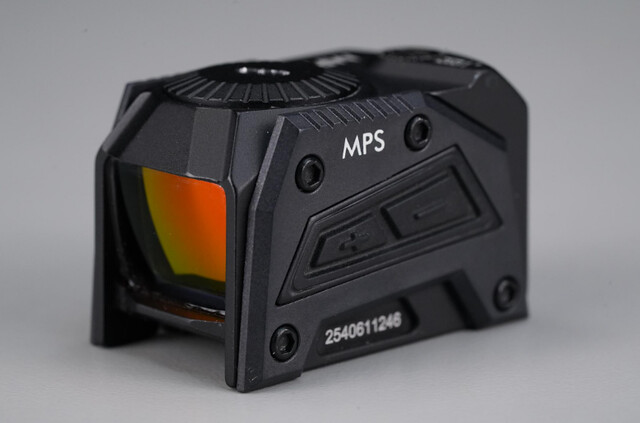
The Steiner MPS brings duty-grade enclosed-emitter durability to shooters who want maximum environmental protection.
Specifications
- Enclosed emitter
- 3.3 MOA dot
- Aluminum housing
- Waterproof design
- Side battery access
- Duty-focused construction
Pros
- Fully enclosed design
- Outstanding durability
- Clear glass
- Excellent weather resistance
Cons
- Heavier than open emitters
- Taller profile
- More expensive mounting solutions
My Hands-On Notes
The MPS feels incredibly robust. Recoil impulse handling is excellent, and I observed consistent zero retention during extended testing.
The glass exhibits minimal distortion and a relatively neutral tint. The enclosed architecture prevents emitter blockage from water or debris.
Parallax remains well controlled, though the taller body may require additional adaptation for shooters transitioning from iron sights.
What People Say Online
Professional users often cite the MPS as one of the most durable enclosed-emitter pistol optics currently available.
Mounting Clarity
The MPS typically requires dedicated adapter plates or custom milling. Careful selection of mounting hardware is essential on a 1911 platform.
-----➤ Explore User Feedback and Current Pricing on Amazon
How I Tested / Evaluation Criteria
Parallax Performance
No pistol optic is completely parallax-free, but the best designs minimize apparent point-of-impact shift when the dot moves within the window. I evaluated each optic at multiple distances while intentionally offsetting eye position.
Co-Witness and Deck Height
The Springfield Loaded 1911 benefits from a low-mounted optic. Lower deck heights improve presentation consistency and simplify co-witness with suppressor-height sights.
Durability
A .45 ACP 1911 generates a distinct recoil impulse. I prioritize optics that maintain zero through thousands of cycles while resisting impact damage and environmental exposure.
Battery System
Battery life matters, but battery access matters too. Top-loading and side-loading systems reduce maintenance complexity and eliminate unnecessary re-zeroing.
Brightness Range
I assess daylight visibility, low-light usability, and compatibility with night vision settings where applicable. Excessive bloom can reduce precision.
Glass Quality
Clarity, tint, distortion control, and lens coatings all influence performance. A cleaner sight picture helps shooters track the dot more effectively.
Controls and Ergonomics
Brightness buttons should remain accessible and tactile while wearing gloves. Menu systems should be intuitive under stress.
Mounting Ecosystem
The strongest optics also need strong mounting support. Availability of direct milling patterns, adapter plates, and backup sight solutions significantly affects long-term usability.
How to Choose the Right Red Dot for This Gun
A Springfield Loaded 1911 differs from many modern optics-ready pistols because most examples require aftermarket milling or specialized mounting solutions. That makes footprint selection critically important.
For defensive use, durability should be your highest priority. The Trijicon RMR Type 2, Holosun EPS Carry, and Steiner MPS all excel in this role. The enclosed-emitter designs offer additional protection against environmental contamination, while the RMR remains a proven standard for ruggedness.
For competition, window size becomes more important. Larger windows make it easier to reacquire the dot during rapid fire and transitions. The Trijicon SRO and Leupold DeltaPoint Pro clearly stand out in this category.
Mounting compatibility is another major consideration. RMR-footprint optics enjoy the broadest support within the custom 1911 market. Choosing an RMR-compatible optic often simplifies future upgrades and mounting choices.
Battery maintenance also deserves attention. Bottom-loading batteries require optic removal during replacement, potentially affecting zero. Side-loading and top-loading systems offer greater convenience.
Shooters who carry daily should strongly consider enclosed-emitter optics. Pocket lint, rain, sweat, and debris can obstruct open emitters under real-world conditions. Enclosed systems dramatically reduce this risk.
Finally, avoid selecting an optic solely because it offers the largest window or longest battery life. Balance durability, footprint compatibility, deck height, and intended use. A properly mounted optic that fits your shooting style will outperform a feature-rich optic that compromises presentation or reliability.
FAQs
Can a Springfield Loaded 1911 accept a red dot without slide milling?
Yes. Dovetail adapter mounts exist, but slide milling generally provides better durability, lower deck height, and improved co-witness options.
What footprint is best for a 1911 red dot setup?
The RMR footprint remains the most widely supported option due to its durability and extensive aftermarket compatibility.
Are enclosed-emitter optics worth it on a 1911?
For defensive carry and harsh environments, yes. They prevent emitter blockage from water, lint, and debris.
Which optic offers the fastest target acquisition?
The Trijicon SRO and Leupold DeltaPoint Pro provide some of the largest windows currently available for pistol optics.
Do I need suppressor-height sights?
In most optic-equipped 1911 builds, suppressor-height sights are recommended to achieve an effective backup co-witness.
Conclusion
When selecting the Best Red Dot For Springfield Loaded 1911, I prioritize mounting compatibility, durability, practical deck height, and real-world shooting performance over flashy specifications. The Trijicon RMR Type 2 remains the safest all-around choice, the Holosun 507C delivers outstanding value, and the Steiner MPS leads the enclosed-emitter category. Whichever optic you choose, proper slide milling and quality mounting hardware will have just as much impact on performance as the optic itself.