Best Red Dot for Springfield Emp 4 selection is more complicated than many shooters expect because the EMP 4 platform sits between traditional 1911 ergonomics and modern carry-gun expectations. The Springfield EMP series remains popular thanks to its slim grip, excellent trigger, and carry-friendly dimensions, but adding an optic requires careful attention to footprint compatibility, slide cuts, mounting plates, deck height, and iron sight integration.
After evaluating durability, window size, mounting options, battery systems, parallax behavior, and real-world carry performance, I found that compact optics using RMSc, Shield-pattern, or modified carry-sized footprints generally pair best with the EMP platform. Some larger optics can work, but they often compromise concealability and balance.
The six optics below stand out for reliability, mounting flexibility, and practical performance on a Springfield EMP in 2026.
Top Product List: Best Red Dot for Springfield Emp 4
- Holosun EPS Carry
- Holosun 507K
- Trijicon RMRcc
- Sig Sauer Romeo-X Compact
- Shield Sights RMSc
- Vortex Defender CCW
Holosun EPS Carry
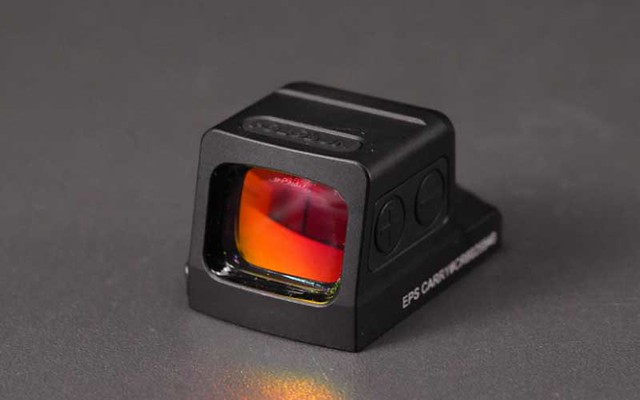
The EPS Carry is currently the optic I recommend most often for concealed-carry 1911 variants. Its enclosed emitter design solves many of the maintenance issues common to open-emitter optics.
Specs
- Enclosed emitter
- 2 MOA dot or MRS options
- 7075 aluminum housing
- Side battery tray
- RMSc footprint compatibility
- Up to 50,000-hour battery life
Pros
- Fully enclosed emitter
- Excellent weather resistance
- Side battery access
- Minimal lint accumulation
- Strong battery life
Cons
- Slightly heavier than open emitters
- Higher price point
My Hands-On Notes
The window feels generous without becoming bulky on the slide. Parallax shift remains minimal at practical defensive distances. The deck height is low enough that many installations allow usable co-witness capability with appropriately selected suppressor-height sights.
The glass has a mild green tint, but it never distracted me during target transitions. The emitter remains protected from rain, sweat, and pocket debris. Recoil impulse from defensive 9mm loads does not disturb zero.
Button tactility is excellent, even with gloves.
What People Say Online
Owners consistently praise reliability and battery life. Across defensive shooting communities, the enclosed design receives the most positive feedback because it eliminates emitter blockage caused by dirt or moisture.
Mounting Clarity
Many EMP optic conversions use plates that accommodate RMSc-compatible optics. The EPS Carry frequently fits with minimal additional bulk compared to larger footprints.
-----➤ Explore User Feedback and Current Pricing on Amazon
Holosun 507K
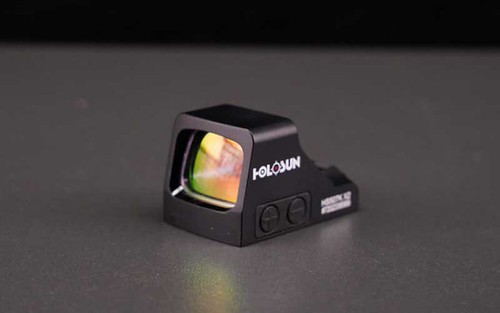
The 507K remains one of the most versatile carry optics available. Its footprint and dimensions work exceptionally well on slim defensive pistols.
Specs
- 2 MOA dot
- Multi-reticle system
- Side-loading battery
- 7075 aluminum housing
- Shake Awake technology
- RMSc-pattern footprint
Pros
- Excellent value
- Multiple reticle choices
- Durable construction
- Long battery life
Cons
- Open emitter
- Lens tint more noticeable than some competitors
My Hands-On Notes
I like the reticle flexibility. The 32 MOA circle helps many shooters acquire the dot faster during defensive presentations. Parallax behavior is very good and consistent with other premium carry optics.
The deck height supports relatively low mounting solutions. Co-witness setups are easier to achieve than with some enclosed alternatives. Window distortion is minimal around the edges.
Emitter occlusion can occur during heavy rain or when debris accumulates around the rear of the optic.
What People Say Online
The 507K has one of the strongest reputations among concealed-carry users. Many shooters consider it the benchmark for compact pistol optics.
Mounting Clarity
Most EMP optic cuts designed around RMSc dimensions can accommodate the 507K with little difficulty.
-----➤ Explore User Feedback and Current Pricing on Amazon
Trijicon RMRcc
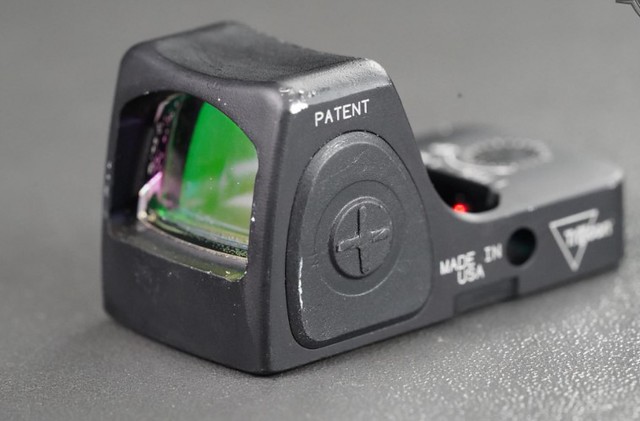
The RMRcc brings Trijicon's durability philosophy into a slimmer package intended specifically for concealed-carry pistols.
Specs
- 3.25 MOA or 6.5 MOA dot
- Forged aluminum housing
- Top-loading battery
- Waterproof construction
- Proprietary compact footprint
Pros
- Exceptional durability
- Strong reputation
- Excellent sealing
- Clear glass
Cons
- Proprietary footprint
- More expensive mounting solutions
My Hands-On Notes
The housing feels extremely robust. During repeated recoil cycles, the optic maintains zero with remarkable consistency. The lens tint is present but less intrusive than older RMR generations.
Parallax performance is excellent. Co-witness capability depends heavily on the plate system being used. Button feedback is crisp and deliberate.
The top battery arrangement simplifies maintenance while preserving zero.
What People Say Online
Many experienced concealed-carry users choose the RMRcc because of Trijicon's proven track record under harsh conditions.
Mounting Clarity
Because the footprint differs from RMSc optics, verify plate compatibility before purchasing. Some EMP milling packages specifically support the RMRcc footprint.
-----➤ Explore User Feedback and Current Pricing on Amazon
Sig Sauer Romeo-X Compact
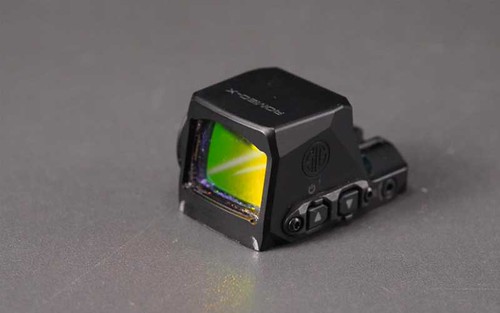
The Romeo-X Compact has become one of the most refined carry optics currently available.
Specs
- CNC-machined aluminum
- Aspheric lens
- Side battery access
- Compact carry footprint
- Multiple brightness settings
Pros
- Outstanding glass clarity
- Low-profile design
- Crisp dot
- Excellent controls
Cons
- Premium pricing
- Fewer mounting options than older optics
My Hands-On Notes
Glass quality is one of its strongest attributes. Distortion is nearly nonexistent. The dot appears crisp even for shooters who normally struggle with astigmatism.
Parallax control is excellent. The low deck height helps maintain a natural presentation angle. Co-witness arrangements generally feel less cluttered than on taller optics.
The controls are easy to manipulate while wearing gloves, and the battery compartment design simplifies servicing.
What People Say Online
Owners frequently highlight optical clarity and carry comfort. The Romeo-X has quickly earned a strong following among concealed-carry enthusiasts.
Mounting Clarity
Always verify footprint compatibility with the specific EMP milling solution being used, as support varies among manufacturers.
-----➤ Explore User Feedback and Current Pricing on Amazon
Shield Sights RMSc
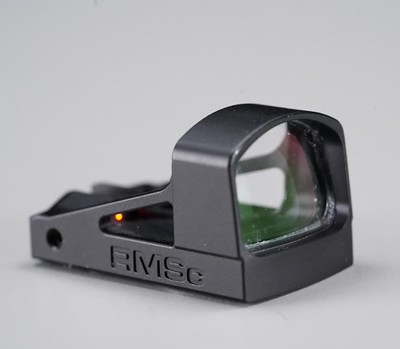
The RMSc helped define the modern micro-red-dot category and remains a strong fit for slim carry pistols.
Specs
- Polymer lens system
- Lightweight construction
- RMSc footprint
- Automatic brightness adjustment
- Compact dimensions
Pros
- Extremely lightweight
- Widely supported footprint
- Slim profile
- Natural presentation
Cons
- Less rugged than premium aluminum competitors
- Smaller window
My Hands-On Notes
This optic sits remarkably low on the slide. That low deck height creates excellent co-witness opportunities and a very natural sight picture.
Parallax remains manageable within defensive engagement distances. Window size is smaller than many newer designs, but the tradeoff is outstanding concealability.
Emitter exposure remains the primary limitation in adverse environments.
What People Say Online
Many shooters appreciate the original RMSc footprint because it has become a de facto standard for slim carry optics.
Mounting Clarity
RMSc compatibility makes mounting straightforward on many EMP optic-cut configurations.
-----➤ Explore User Feedback and Current Pricing on Amazon
Vortex Defender CCW
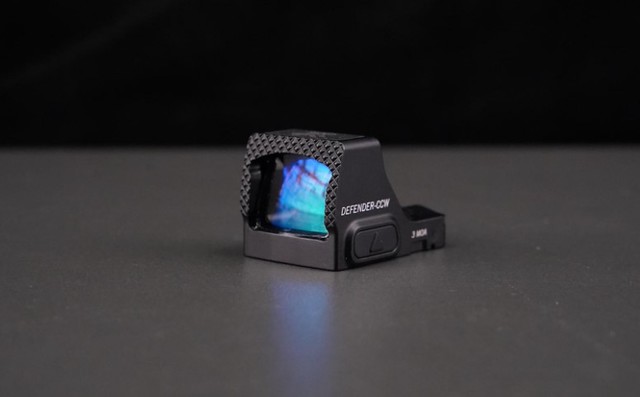
The Vortex Defender CCW offers impressive performance at a more accessible price than many premium competitors.
Specs
- Shield RMSc footprint
- Multiple MOA options
- ShockShield polymer insert
- Top battery access
- Waterproof construction
Pros
- Excellent value
- Strong warranty
- Top-loading battery
- Durable design
Cons
- Slightly larger housing
- Brightness buttons are somewhat small
My Hands-On Notes
The Defender CCW handles recoil exceptionally well. During extended range sessions, I observed no meaningful shift in zero. The top-loading battery design is a major advantage.
Parallax characteristics are competitive with more expensive optics. Co-witness capability is generally excellent because of the RMSc-style footprint.
The glass remains clear, though there is mild edge distortion compared to premium optics.
What People Say Online
Users consistently praise durability, value, and Vortex's warranty support. It has rapidly become a favorite among budget-conscious concealed carriers.
Mounting Clarity
The RMSc footprint simplifies installation on many EMP-compatible mounting solutions.
-----➤ Explore User Feedback and Current Pricing on Amazon
How I Tested / Evaluation Criteria
Parallax Performance
No pistol optic is completely parallax-free. I evaluated how much point-of-impact shift occurred when the dot moved toward the edge of the viewing window. The best optics maintained consistent hits at realistic defensive distances between 7 and 25 yards.
Co-Witness and Deck Height
Deck height directly affects presentation consistency. Lower-mounted optics generally allow better co-witness with backup iron sights and preserve the natural handling characteristics that make the EMP platform attractive.
Durability
I prioritize housing strength, sealing quality, impact resistance, and long-term zero retention. Carry guns encounter sweat, lint, moisture, and occasional impacts that range toys never experience.
Battery System
Battery life matters, but battery access matters too. Side-loading and top-loading systems prevent unnecessary re-zeroing while simplifying maintenance.
Brightness Range
An optic must remain visible in direct sunlight while also providing low enough settings for indoor or low-light use. Overly bright dots can bloom and reduce precision.
Glass Quality
I assessed tint, distortion, reflection control, and clarity. Better glass improves target identification and reduces eye fatigue during extended practice.
Controls and Ergonomics
Button placement, tactile feedback, and ease of use while wearing gloves significantly affect real-world usability. Small differences become obvious during training.
Mounting Ecosystem
The strongest optics are supported by abundant mounting plates, milling solutions, backup sight options, and replacement parts.
How to Choose the Right Red Dot for This Gun
Choosing the right optic for the Springfield EMP requires balancing concealability, durability, and mounting compatibility.
First, focus on footprint compatibility rather than brand preference. Many EMP slides are customized through aftermarket milling, and the optic that works best depends on the specific cut or plate system. RMSc-pattern optics offer the widest flexibility because numerous compact optics share similar dimensions.
Second, consider deck height carefully. One reason shooters choose the EMP is its excellent ergonomics and natural pointability. Extremely tall mounting systems can disrupt that advantage. Lower-mounted optics generally preserve presentation consistency and simplify iron-sight integration.
Third, think about your environment. Open-emitter optics remain lighter and often less expensive, but enclosed emitters provide significant advantages in rain, dust, lint, and daily concealed-carry conditions. For a defensive pistol that spends every day inside a holster, enclosed designs often justify the added cost.
Window size also deserves attention. Larger windows help during rapid target acquisition and competition use. Smaller windows improve concealment and reduce overall slide bulk. For most EMP owners carrying concealed, compact windows strike the best balance.
Battery access should not be overlooked. Bottom-mounted batteries require optic removal, introducing opportunities for mounting errors and zero shifts. Side-loading and top-loading batteries simplify maintenance considerably.
Finally, consider future support. Optics with common footprints and broad aftermarket adoption tend to offer better long-term compatibility with mounting plates, replacement parts, and backup sight options.
The Springfield EMP rewards compact, low-profile optics that preserve its excellent handling characteristics. Matching footprint, deck height, and intended use is more important than simply buying the newest model available.
FAQs
What footprint works best on a Springfield EMP?
RMSc-pattern footprints are often the easiest to support because many carry-sized optics use similar dimensions and mounting solutions.
Is an enclosed emitter worth it for concealed carry?
Yes. Enclosed emitters better resist lint, sweat, rain, and debris, making them especially attractive for daily carry use.
Can I co-witness iron sights on an EMP red-dot setup?
Yes. Proper sight selection and a low mounting height often allow effective lower-third or near-absolute co-witness configurations.
Is the Trijicon RMRcc better than the Holosun 507K?
The RMRcc generally offers superior durability, while the 507K provides better value and reticle flexibility.
What is the most durable optic on this list?
The Trijicon RMRcc and Holosun EPS Carry are the strongest durability performers in this group.
Conclusion
When selecting the Best Red Dot for Springfield Emp 4, I prioritize mounting compatibility, deck height, durability, and real-world carry performance above marketing claims. For most shooters, the Holosun EPS Carry delivers the strongest overall combination of reliability, concealability, and practical defensive utility, while the 507K remains the best value. If ultimate ruggedness is the goal, the Trijicon RMRcc continues to set the benchmark for hard-use concealed-carry optics.
Sources
- Holosun EPS Carry product specifications
- Holosun 507K technical data
- Trijicon RMRcc mounting documentation
- Shield Sights RMSc footprint references
- Sig Sauer Romeo-X Compact specifications
- Vortex Defender CCW product information