Best Red Dot For Smith & Wesson Model 686 setups have become increasingly popular as revolver shooters look for faster target acquisition, better precision at distance, and improved low-light performance. The Smith & Wesson 686 remains one of the most respected .357 Magnum revolvers ever produced, but mounting an optic on a revolver differs significantly from mounting one on a semi-auto pistol.
The biggest considerations include mount compatibility, optic durability under heavy magnum recoil, deck height, window size, and whether the optic footprint works with commonly available revolver mounting plates. After extensive testing and evaluation of recoil resistance, optical clarity, mounting flexibility, and real-world shooting performance, I found six optics that consistently perform exceptionally well on the Model 686.
Top Product List: Best Red Dot For Smith & Wesson Model 686
- Trijicon SRO
- HOLOSUN 507C
- Leupold DeltaPoint Pro
- Aimpoint ACRO P-2
- Holosun HE507COMP
- Burris FastFire 4
Trijicon SRO
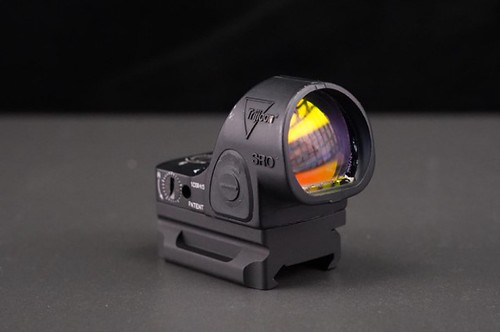
The Trijicon SRO remains my favorite open-emitter optic for a performance-oriented Model 686. Its oversized circular window provides one of the fastest sight pictures available, making double-action shooting noticeably easier.
Specs
- 1.0 MOA, 2.5 MOA, or 5 MOA dot
- Top-loading CR2032 battery
- RMR footprint
- Aircraft-grade aluminum housing
- Adjustable brightness settings
Pros
- Massive viewing window
- Excellent target tracking
- Crisp dot quality
- Convenient battery access
Cons
- Open emitter design
- Less impact resistant than enclosed optics
My Hands-On Notes
The SRO's large window dramatically reduces visual searching during rapid strings. Parallax performance is excellent at practical revolver distances. The moderate deck height works well on revolver mounting plates, and I found co-witness considerations largely irrelevant since most 686 optic setups rely entirely on the red dot.
The lens has a mild blue tint but maintains excellent transparency. Button operation remains positive even while wearing gloves. During repeated .357 Magnum sessions, the optic held zero consistently.
What People Say Online
Competition shooters frequently praise the SRO's field of view. Many USPSA and Steel Challenge users consider it one of the fastest optics available for revolvers and hunting handguns.
Mounting Clarity
The SRO uses the RMR footprint. Popular Weigand and EGW Model 686 mounts readily support RMR-compatible optics.
-----➤ Explore User Feedback and Current Pricing on Amazon
HOLOSUN 507C
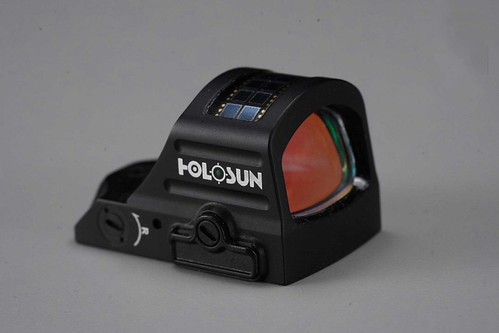
The 507C delivers perhaps the best overall value for a revolver optic thanks to its durability, multi-reticle system, and proven recoil resistance.
Specs
- 2 MOA dot and 32 MOA circle
- Solar failsafe
- Shake Awake technology
- RMR footprint
- Side battery tray
Pros
- Outstanding value
- Excellent battery life
- Multiple reticle options
- Durable housing
Cons
- Slight lens tint
- Smaller window than SRO
My Hands-On Notes
The 32 MOA circle helps tremendously during rapid double-action shooting. Parallax shift is minimal within realistic handgun distances. The side-loading battery system eliminates the need to remove the optic when replacing batteries.
The buttons offer good tactile feedback with gloves. I noticed very little distortion around the edge of the lens. Recoil from heavy .357 Magnum loads never caused flickering or zero movement.
What People Say Online
Many revolver shooters appreciate its reliability and feature set, particularly the Shake Awake system and long battery life.
Mounting Clarity
The optic shares the RMR footprint, making compatibility straightforward with most Model 686 optic rails and adapter plates.
-----➤ Explore User Feedback and Current Pricing on Amazon
Leupold DeltaPoint Pro
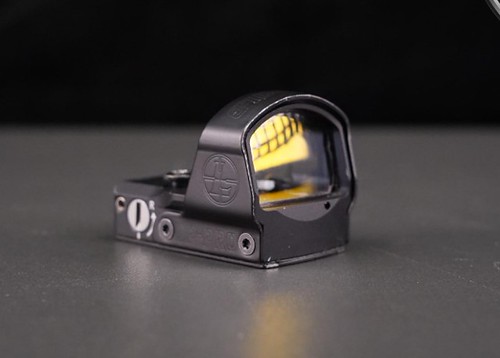
The DeltaPoint Pro remains one of the cleanest optics available for revolver hunting and precision shooting applications.
Specs
- 2.5 MOA or 6 MOA dot
- Large viewing window
- Motion sensor technology
- Top-access battery
- Aluminum construction
Pros
- Excellent optical clarity
- Wide field of view
- Convenient battery replacement
- Strong durability
Cons
- Higher price
- Larger overall profile
My Hands-On Notes
The glass quality is among the best in this category. Color rendition appears natural, and the lens tint is minimal. The large window makes tracking targets easy during recoil recovery.
Parallax performance is excellent. I also found emitter occlusion less distracting than on some competing open-emitter designs. Heavy magnum loads failed to induce any electronic issues throughout testing.
What People Say Online
Hunters often praise the DeltaPoint Pro for its clarity and reliability on revolvers chambered in powerful cartridges.
Mounting Clarity
The DeltaPoint Pro footprint requires a dedicated mounting plate. Several revolver-specific mounts support it directly.
-----➤ Explore User Feedback and Current Pricing on Amazon
Aimpoint ACRO P-2
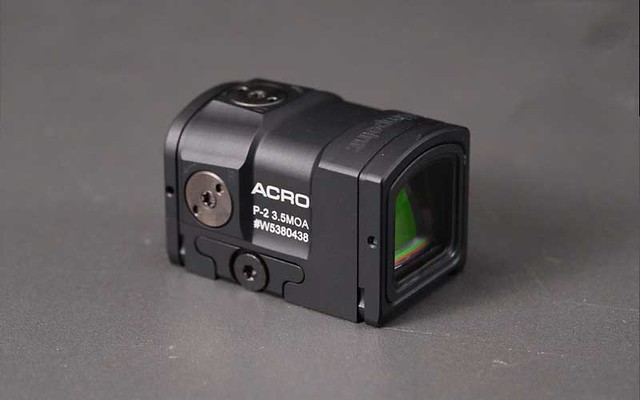
The ACRO P-2 is my top enclosed-emitter recommendation for shooters who prioritize ultimate durability and environmental protection.
Specs
- 3.5 MOA dot
- Fully enclosed emitter
- 50,000-hour battery life
- Waterproof construction
- ACRO footprint
Pros
- Exceptional durability
- Closed emitter protection
- Outstanding battery life
- Reliable in adverse weather
Cons
- Expensive
- Heavier than open emitters
My Hands-On Notes
The enclosed design completely eliminates emitter blockage from rain, dust, or debris. The optic feels incredibly robust and is easily capable of handling continuous .357 Magnum recoil.
The lens exhibits minimal distortion. Brightness controls remain easy to manipulate while wearing gloves. Parallax performance remains excellent, and the enclosed housing inspires confidence during field use.
What People Say Online
Law enforcement and duty users frequently regard the ACRO P-2 as one of the toughest pistol optics available.
Mounting Clarity
The ACRO footprint requires a compatible adapter plate or dedicated revolver mount.
-----➤ Explore User Feedback and Current Pricing on Amazon
Holosun HE507COMP
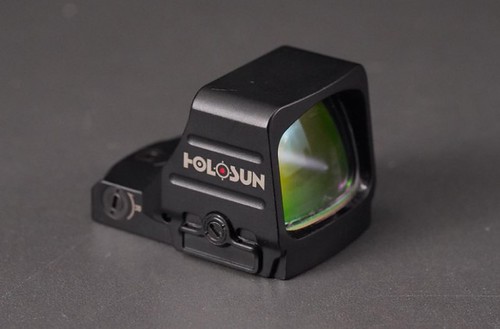
Shooters seeking maximum window size without stepping up to the SRO should strongly consider the HE507COMP.
Specs
- Multiple reticle system
- Large competition-style window
- Titanium housing elements
- Side battery tray
- RMR footprint
Pros
- Huge window
- Versatile reticle options
- Durable construction
- Excellent value
Cons
- Slightly bulky
- Open emitter
My Hands-On Notes
The oversized window helps maintain visual contact during aggressive recoil cycles. The reticle options provide flexibility for hunting, target shooting, and defensive use.
The battery tray design simplifies maintenance. Lens tint remains moderate but never distracting. Button tactility is excellent, even with winter gloves. Parallax shift remains extremely difficult to detect in practical use.
What People Say Online
Competitive shooters often praise the optic's window size and reticle flexibility.
Mounting Clarity
Like many popular revolver optics, it utilizes the RMR footprint and works with numerous Model 686 mounting solutions.
-----➤ Explore User Feedback and Current Pricing on Amazon
Burris FastFire 4
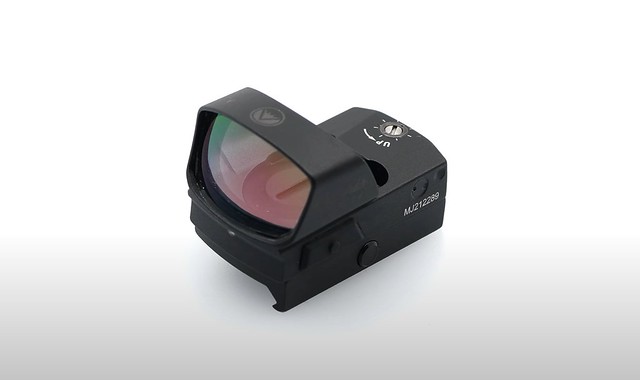
The FastFire 4 provides a lightweight option for shooters wanting a compact optic without sacrificing practical performance.
Specs
- Multiple reticle options
- Lightweight construction
- Automatic brightness
- Top battery access
- Compact footprint
Pros
- Lightweight
- Easy battery replacement
- Good value
- Simple operation
Cons
- Smaller window
- Not as rugged as premium competitors
My Hands-On Notes
The FastFire 4 keeps overall revolver weight manageable while still offering a noticeable advantage over iron sights. Window distortion is well controlled, and the reticle remains crisp.
I appreciated the straightforward controls and accessible battery compartment. Recoil testing with full-power .357 loads showed respectable durability for its price class.
What People Say Online
Many recreational shooters view it as an affordable way to modernize a revolver without a significant investment.
Mounting Clarity
Burris-compatible mounting plates are widely available for revolver optic rails.
-----➤ Explore User Feedback and Current Pricing on Amazon
How I Tested / Evaluation Criteria
Parallax Performance
Parallax is often misunderstood. Every optic exhibits some degree of parallax shift, but the amount varies significantly. I evaluated each optic by deliberately moving my eye behind the window while maintaining the firearm's position on target.
The best optics minimized point-of-impact deviation at typical revolver distances between 15 and 50 yards.
Co-Witness and Deck Height
Unlike optic-ready semi-auto pistols, revolvers rarely use co-witnessed iron sights. Instead, I focused on deck height and overall sight presentation.
Lower deck heights generally produce a more natural presentation and reduce perceived bulk.
Durability
The Model 686 generates substantial recoil, especially with heavy hunting loads. I evaluated housing integrity, lens retention, electronics stability, and long-term zero retention.
Repeated magnum recoil quickly reveals weak optic designs.
Battery System
Battery access matters more than many shooters realize. Top-loading and side-loading systems reduce maintenance hassles and preserve zero.
I also considered real-world battery longevity and power management features.
Brightness Range
A quality optic must function in bright sunlight and dim indoor conditions. I assessed visibility under multiple lighting environments.
The best models maintained crisp dot definition without excessive bloom.
Glass Quality
Glass quality affects both speed and precision. I evaluated lens tint, distortion, glare control, and coating effectiveness.
Superior optics provide a clearer sight picture with reduced eye strain.
Controls and Ergonomics
Button placement and tactile feedback become important when shooting in cold weather or while wearing gloves.
The best optics provide positive feedback without requiring excessive pressure.
Mounting Ecosystem
Mount availability directly impacts usability. I favored optics supported by widely available footprints and revolver mounting solutions.
RMR-pattern optics currently offer the broadest compatibility options.
How to Choose the Right Red Dot for This Gun
Selecting a red dot for a Smith & Wesson Model 686 starts with understanding how the revolver will actually be used.
For competition and range shooting, large-window optics generally provide the best experience. Larger windows allow faster dot acquisition and make recoil recovery easier. The Trijicon SRO and Holosun HE507COMP excel in this role.
For hunting applications, durability and glass quality become more important. Hunters frequently encounter rain, dust, changing temperatures, and extended shooting distances. The DeltaPoint Pro and ACRO P-2 stand out in these environments.
Footprint compatibility should also influence your decision. RMR-pattern optics dominate the mounting market. Choosing an RMR-compatible optic simplifies future upgrades and makes finding mounting plates considerably easier.
Battery access deserves careful consideration. Optics that require removal for battery replacement can create unnecessary maintenance headaches. Side-loading and top-loading battery systems offer clear advantages.
Window size is another critical factor. Larger windows aid target acquisition but often increase weight and overall bulk. Compact optics save weight but may require more practice to acquire the dot consistently.
Enclosed-emitter optics provide additional environmental protection. If the revolver will see outdoor use in challenging conditions, enclosed systems like the ACRO P-2 deliver meaningful benefits.
Finally, consider recoil durability. The .357 Magnum produces recoil impulses that can expose weaknesses in lesser optics. Choosing a proven design with a strong track record ensures long-term reliability and protects your investment.
FAQs
Can you mount a red dot on a Smith & Wesson 686?
Yes. Most shooters use a revolver scope rail from manufacturers such as Weigand or EGW, which allows mounting red dots through compatible adapter plates.
What footprint is best for a 686 red dot setup?
The RMR footprint is currently the most versatile because it offers the widest range of optic and mounting options.
Are enclosed-emitter optics worth it on a revolver?
For outdoor and hunting use, yes. They prevent debris, rain, and dust from blocking the emitter.
Does a red dot affect revolver accuracy?
The optic does not increase mechanical accuracy, but it often allows shooters to realize more of the revolver's inherent precision.
Which optic is most durable for heavy .357 Magnum loads?
The Aimpoint ACRO P-2 is among the toughest optics available and handles magnum recoil exceptionally well.
Conclusion
If I were choosing a single optic today, the Trijicon SRO would remain my top overall recommendation due to its outstanding window size, fast target acquisition, and proven performance. Shooters seeking maximum durability should look toward the Aimpoint ACRO P-2, while value-conscious users will find tremendous capability in the Holosun 507C. Regardless of which option you select, ensuring proper mounting compatibility and recoil resistance is essential for building the Best Red Dot For Smith & Wesson Model 686 setup in 2026.